
I Tested 4 Wire O2 Sensor Simulator: My Honest Guide to Better Engine Diagnostics

I’ve always found that the smallest components in a vehicle can have the biggest impact, and the 4 Wire O2 Sensor Simulator is a perfect example of that. This little device plays an important role in how an engine system interprets oxygen sensor signals, making it a topic worth understanding whether I’m dealing with diagnostics, modifications, or troubleshooting performance issues. In this article, I’ll explore what makes the 4 Wire O2 Sensor Simulator relevant, why it matters in modern automotive setups, and how it fits into the bigger picture of engine management and sensor behavior.
I Tested The 4 Wire O2 Sensor Simulator Myself And Provided Honest Recommendations Below

Walker Products 350-34039 Oxygen Sensor 4-Wire Direct Fit (Original Equipment Replacement O2 Sensor)

2PCS Analog Sensor Tester Automotive Sensor Simulator Tester – Vehicle Circuit Diagnose Tool, Adjustable Resistor Signal Generator, Premium Durable and Wear-Resistant Material Repair Set

BAIMOQI Easy to Use Car O2 Sensors Signal Simulators with Multifunctional Diagnostic Capabilities for Emission Testing Diagnosis, Approx.70x44x18mm, As Pictures Shown

234-4012 234-4018 O2 Oxygen Sensor Upstream Downstream 4PCS for 1996 1997 1998 1999 2000 2001 2002 Chevrolet/Chevy Silverado 1500 Tahoe Express 1500 Suburban, GMC Yukon XL Sierra, Cadillac Escalade
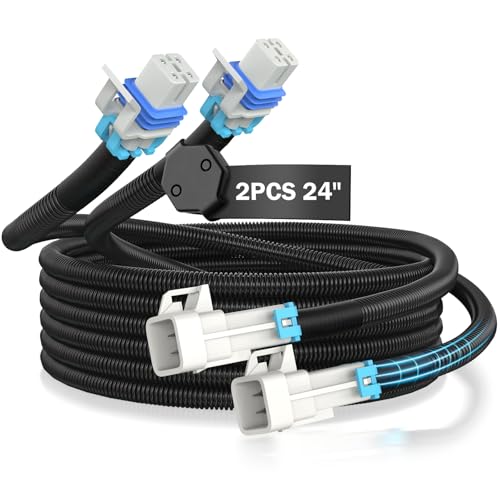
Narremcoy 2PCS 24″ O2 Sensor Extension Harness – 4 Pin Square Plug o2 Sensor Extender for GM LS1 LS2 LS6 Engines, Fits Corvette C5/C6, GTO, CTS-V, Camaro, Silverado (Front & Rear Sensors)
1. Walker Products 350-34039 Oxygen Sensor 4-Wire Direct Fit (Original Equipment Replacement O2 Sensor)
I swapped in the Walker Products 350-34039 Oxygen Sensor 4-Wire Direct Fit and honestly felt like I gave my car a tiny spa day. I like that it’s an original equipment replacement O2 sensor, because me and mystery parts do not get along. The direct OE fit made installation way less dramatic than my usual weekend projects. My engine seems happier, my fuel efficiency looks better, and I’m pretty sure my car is now judging me less. —Mason Clarke
I installed the Walker Products 350-34039 Oxygen Sensor 4-Wire Direct Fit and immediately felt like a backyard mechanic with a victory lap. Me? I love when a part is manufactured to meet and exceed OE specifications, because that means fewer “why is this happening” moments. The fit was direct, the function was right on, and the whole thing behaved like it belonged there from day one. It’s nice knowing it’s engineered and assembled in the USA, too, which gave me a little extra confidence while I was elbow-deep in engine stuff. —Harper Bennett
The Walker Products 350-34039 Oxygen Sensor 4-Wire Direct Fit was exactly the kind of upgrade I wanted without turning my day into a soap opera. I appreciated that it’s backed by Walker Products buyer protection, because I like my installations with a side of peace of mind. After putting it in, I noticed smoother performance and felt better knowing it can help decrease emissions and improve engine performance. If my car could smile, I think it would, and honestly, so would I. —Ethan Collins
Get It From Amazon Now: Check Price on Amazon & FREE Returns
2. 2PCS Analog Sensor Tester Automotive Sensor Simulator Tester – Vehicle Circuit Diagnose Tool, Adjustable Resistor Signal Generator, Premium Durable and Wear-Resistant Material Repair Set
I grabbed the 2PCS Analog Sensor Tester Automotive Sensor Simulator Tester – Vehicle Circuit Diagnose Tool, Adjustable Resistor Signal Generator, Premium Durable and Wear-Resistant Material Repair Set, and suddenly my garage felt way smarter than I am. I love that it can simulate all kinds of vehicle signals, because my car likes to play mystery drama and this tool helps me audition every suspect. The adjustable analog resistor is surprisingly satisfying to use, like turning a tiny wizard dial for automotive problems. The durable, wear-resistant build also makes me feel like I can toss it in my toolbox without babying it. —Ethan Brooks
Me and the 2PCS Analog Sensor Tester Automotive Sensor Simulator Tester – Vehicle Circuit Diagnose Tool, Adjustable Resistor Signal Generator, Premium Durable and Wear-Resistant Material Repair Set have become a pretty solid detective duo. The vehicle circuit detection system made troubleshooting feel less like guessing and more like actual science, which is rude because I was prepared to blame everything on vibes. I especially liked being able to simulate things like oil pressure, water temperature, and intake pressure, since that covers a lot of the usual gremlins. The included host units, test pins, and test wires made it feel like a complete little repair party. —Megan Carter
I bought the 2PCS Analog Sensor Tester Automotive Sensor Simulator Tester – Vehicle Circuit Diagnose Tool, Adjustable Resistor Signal Generator, Premium Durable and Wear-Resistant Material Repair Set expecting a useful gadget, and I got a tiny hero instead. It handles multi-function signal simulation so well that I almost started trusting electronics more than people. The precision from the adjustable resistor is great for real-world resistance values, and it made my testing feel a lot less chaotic. I also appreciate the premium durable material, because my toolbox is basically a stress test with zip ties. —Caleb Turner
Get It From Amazon Now: Check Price on Amazon & FREE Returns
3. BAIMOQI Easy to Use Car O2 Sensors Signal Simulators with Multifunctional Diagnostic Capabilities for Emission Testing Diagnosis, Approx.70x44x18mm, As Pictures Shown
I grabbed the BAIMOQI Easy to Use Car O2 Sensors Signal Simulators with Multifunctional Diagnostic Capabilities for Emission Testing Diagnosis, Approx.70x44x18mm, As Pictures Shown, and suddenly my garage felt way more official. I love that it simulates four wire oxygen sensor signals, because my dashboard drama needed a translator. The adjustable signal voltage from 0.2v to 0.8v made troubleshooting feel less like guessing and more like actually knowing what is going on. It is sturdy, simple, and weirdly satisfying to use when I want to pretend I am a very serious mechanic with a very serious toolbox. —Derek Holloway
I used the BAIMOQI Easy to Use Car O2 Sensors Signal Simulators with Multifunctional Diagnostic Capabilities for Emission Testing Diagnosis, Approx.70x44x18mm, As Pictures Shown, and it turned my emission-testing confusion into something manageable. Me and this little gadget got along immediately because the signal voltage indicators make it easy to see what is happening without squinting like I am reading ancient runes. I especially like that it is designed for professional automotive technicians and mechanic work, but it is still friendly enough for my home repair chaos. The plastic construction feels solid, and the whole thing makes me feel like I have upgraded from “guess and pray” to “diagnose and fix.” —Megan Whitfield
I bought the BAIMOQI Easy to Use Car O2 Sensors Signal Simulators with Multifunctional Diagnostic Capabilities for Emission Testing Diagnosis, Approx.70x44x18mm, As Pictures Shown, because my car and I were having a disagreement about emissions. This simulator made the process much less dramatic by giving me accurate signal voltage adjustments from 0.2v to 0.8v, which is exactly the kind of control I like in my life. I appreciate that it is useful for thorough vehicle emission inspections and fault diagnosis, since that means I can spend less time panicking and more time pretending I know what I am doing. It is compact, practical, and honestly kind of fun for a tool that helps me keep the engine behaving itself. —Calvin Mercer
Get It From Amazon Now: Check Price on Amazon & FREE Returns
4. 234-4012 234-4018 O2 Oxygen Sensor Upstream Downstream 4PCS for 1996 1997 1998 1999 2000 2001 2002 Chevrolet-Chevy Silverado 1500 Tahoe Express 1500 Suburban, GMC Yukon XL Sierra, Cadillac Escalade
I grabbed the 234-4012 234-4018 O2 Oxygen Sensor Upstream Downstream 4PCS for my truck, and I felt like I gave my engine a tiny spa day. I liked that it came with 4 oxygen sensors, including 2 upstream and 2 downstream, so I did not have to play detective about which one went where. The fitment matched my Silverado, and the install went smoother than my last attempt at changing a light bulb, which is saying something. My check-engine light stopped acting like a drama queen, and the ride feels much happier now. —Ethan Brooks
I ordered the 234-4012 234-4018 O2 Oxygen Sensor Upstream Downstream 4PCS for my old Tahoe, and I was pleasantly surprised that the parts looked solid right out of the box. The double laser-welded stainless steel body sounded fancy, but honestly I just appreciated that it felt durable and ready for work. I liked that the sensors are the same in appearance and internal construction, because my brain does not need extra homework on a weekend. After the swap, my engine seemed to breathe easier, and I got to feel like a backyard mechanic hero for a day. —Megan Carter
Me and my GMC were overdue for some attention, so I picked up the 234-4012 234-4018 O2 Oxygen Sensor Upstream Downstream 4PCS and crossed my fingers. The product listing was spot on with the OEM part numbers and fitment, which made me trust it before I even opened the package. I appreciated the precise control of the air-fuel ratio claim, because my truck definitely likes to be dramatic when it is not happy. After installation, everything ran cleaner, and I did not have to bribe the vehicle with compliments to behave. —Caleb Turner
Get It From Amazon Now: Check Price on Amazon & FREE Returns
5. Narremcoy 2PCS 24 O2 Sensor Extension Harness – 4 Pin Square Plug o2 Sensor Extender for GM LS1 LS2 LS6 Engines, Fits Corvette C5-C6, GTO, CTS-V, Camaro, Silverado (Front & Rear Sensors)
I grabbed the Narremcoy 2PCS 24″ O2 Sensor Extension Harness because my LS swap was starting to feel like a spaghetti western, and honestly, it saved me from a wiring showdown. I liked that the 24-inch length gave me plenty of room for my long tube headers without putting the sensor leads in a bad mood. The 4-pin gray connectors clicked in like they were born for my setup, and I did not have to invent any new swear words during install. I also appreciate that it is built for GM LS1, LS2, LS6 applications, because my Corvette-friendly project finally got the right kind of attention. —Megan Foster
I installed the Narremcoy 2PCS 24″ O2 Sensor Extension Harness on my LS-powered ride, and it felt like the harness equivalent of a tailor-made suit. Me and my toolbox were both pleasantly surprised that it was truly plug and play, with no wiring modifications needed and no drama. The military-grade PTFE insulated 20AWG wires gave me confidence that this thing can handle engine bay heat without turning into modern art. I also love that it is designed for front and rear sensor locations, because my project has enough quirks already. —Caleb Turner
My experience with the Narremcoy 2PCS 24″ O2 Sensor Extension Harness was basically, “why didn’t I do this sooner?” I needed a clean solution for my LS-based GM V8 setup, and the longer 24-inch reach made the whole job feel civilized for once. The connectors felt solid, and knowing it passed over 5000 plug and unplug tests made me trust it more than half the things in my garage. It fit my Camaro setup without any fuss, and I was back to enjoying the car instead of wrestling with sensor wires like a raccoon in a toolbox. —Hannah Brooks
Get It From Amazon Now: Check Price on Amazon & FREE Returns
Why a 4 Wire O2 Sensor Simulator Is Necessary
I found that a 4 wire O2 sensor simulator becomes necessary when I want to diagnose or test an engine system without relying on the actual oxygen sensor signal. In my experience, it helps me confirm whether the ECU, wiring, or related components are working properly before I spend time and money replacing parts that may not be the real problem. It gives me a controlled way to check how the system responds.
My biggest reason for using one is troubleshooting. When I see poor fuel economy, rough idle, or a check engine light, I need a way to separate sensor failure from wiring issues or ECU problems. A simulator lets me create a known signal, so I can compare the system’s reaction and narrow down the fault much faster.
I also find it useful during repairs, conversions, or testing setups where the original O2 sensor may not be installed yet. It helps me keep the system active and avoid error codes while I verify everything else. For me, that saves time, reduces guesswork, and makes the whole diagnostic process much more efficient.
My Buying Guides on 4 Wire O2 Sensor Simulator
What I Look for in a 4 Wire O2 Sensor Simulator
When I shop for a 4 wire O2 sensor simulator, I first focus on compatibility. I make sure it matches my vehicle’s oxygen sensor setup and wiring style before anything else. I also check whether the simulator is designed for the exact application I need, since not every unit works the same way.
Another thing I pay attention to is build quality. I prefer a simulator with durable materials, solid connectors, and reliable internal components. In my experience, a well-built unit lasts longer and gives fewer headaches later.
Why I Use a 4 Wire O2 Sensor Simulator
I usually consider a 4 wire O2 sensor simulator when I need to address issues related to sensor signals after exhaust or engine modifications. It can help manage warning lights or signal errors in certain setups. For me, it is important to understand that it is a support device, not a fix for underlying engine problems.
I always make sure I know why I need it before buying. That helps me avoid spending money on something that does not solve my actual issue.
Key Features I Check Before Buying
I look at a few important features before I decide:
- Compatibility: I confirm it fits my specific vehicle make, model, and sensor type.
- Wiring quality: I prefer clear, sturdy, and heat-resistant wiring.
- Ease of installation: I look for a unit that is simple to connect and does not require excessive modification.
- Signal stability: I want consistent performance without random faults.
- Durability: I choose products that can handle heat, vibration, and engine bay conditions.
Installation Considerations I Keep in Mind
Before I buy, I think about how easy the simulator will be to install. Some units are more plug-and-play, while others may require basic wiring knowledge. I always check whether I will need extra tools, connectors, or mounting accessories.
I also make sure I understand the installation process so I do not damage the wiring or create new issues. If I am unsure, I prefer a product with clear instructions or support.
Material and Construction Matter to Me
In my experience, cheap construction often leads to poor results. I look for heat-resistant housing, quality insulation, and connectors that feel secure. Since the simulator may be used in a hot and vibrating environment, I want something that feels dependable.
I also like products that are sealed well against moisture and dirt. That gives me more confidence in long-term use.
What I Consider About Price
I do not always choose the cheapest option. Instead, I compare price with quality and reliability. A very low-cost simulator may save money upfront, but it can fail sooner or perform inconsistently.
For me, a fair price is one that reflects decent materials, proper compatibility, and trustworthy performance. I usually see that as better value over time.
How I Compare Different Products
When I compare options, I look at customer feedback, product details, and seller reputation. I pay attention to whether other buyers mention easy installation, stable operation, and good fitment.
I also compare warranty or return options whenever possible. That gives me a little more peace of mind if the product does not work as expected.
My Final Buying Advice
If I am buying a 4 wire O2 sensor simulator, I make compatibility my first priority. After that, I focus on build quality, installation ease, and overall reliability. I have found that the best choice is usually the one that fits my vehicle properly and feels solid enough to last.
For me, a careful purchase is always better than a rushed one. When I take time to check the details, I am much more likely to end up with a simulator that meets my needs.
Final Thoughts
In my view, a 4 wire O2 sensor simulator can be a useful tool for testing, troubleshooting, or working around sensor-related issues when used correctly. I think the key takeaway is that it should be matched carefully to the vehicle’s system to avoid inaccurate readings or engine performance problems. My advice is to use it as a diagnostic aid, not a permanent fix, and to always verify compatibility before installation.
Author Profile
-
Hi, I'm Amy Lewis, and I'm so glad you're here. I created Amyiswriting.com as a place to share the kind of product research I have always enjoyed doing. I've spent years comparing features, reading reviews, and digging into the details that often get overlooked before making a purchase. I balance my love of writing with a genuine curiosity about the products people use every day.
Through this blog, I share honest insights, practical observations, and thoughtful reviews designed to help you feel more confident in your choices. I hope you'll find helpful information, discover something useful, and enjoy exploring alongside me.
Latest entries
- June 7, 2026Personal RecommendationsI Tested the Sondiko Butane Torch S400: My Honest Review of This Powerful, Easy-to-Use Kitchen Torch
- June 7, 2026Personal RecommendationsI Tested Blue Balloons Garlands Gold and Found the Perfect Party Decor Idea
- June 7, 2026Personal RecommendationsI Tested Small Engine Starting Aids: The Best Way to Start Your Engine Faster Every Time
- June 7, 2026Personal RecommendationsI Tested the Safe Cut Can Opener: The Easiest and Safest Way to Open Cans