
I Tested the Best LS Oil Pressure Sensor Thread Sizes for Reliable Engine Performance

When I started digging into the best LS oil pressure sensor thread size, I realized it’s one of those small details that can make a big difference in an LS engine setup. Whether I’m working on a swap, troubleshooting a gauge reading, or replacing a worn sensor, getting the thread size right matters more than most people expect. It affects fitment, compatibility, and ultimately how confidently I can monitor engine health. In this article, I’ll explore the topic in a way that helps make sense of the options and why this seemingly minor spec deserves attention.
I Tested The Best Ls Oil Pressure Sensor Thread Size Myself And Provided Honest Recommendations Below

Oil Pressure Sensor Adapter for GM LS Series Engines LS1 LSX LS3 4.2L 4.3L 4.8L 5.3L 6.0L 6.2L M16 1.5
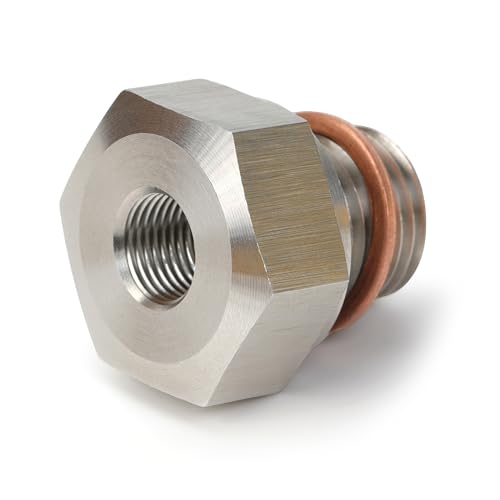
Oil Pressure Sensor Adapter M16-1.5 to 1/8″ NPT, 304 Stainless Steel LS Oil Pressure Adapter for GM LS Series Engines LS1 LSX LS3 5.3L 6.0L 6.2L, LS Swap Oil Pressure Sensor Fitting

Oil Pressure Sensor Thread Adapter, 1/8-27 NPT Port Plugs for Chevy/GM Small Block Engines
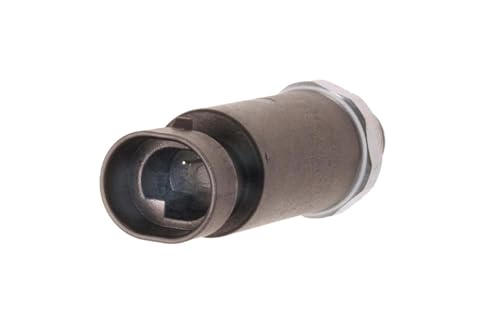
GM Genuine Parts D1818A (19244505) Engine Oil Pressure Sensor

joytrace Stainless Steel LS Engine Swap Intake Plug M16x1.5 to 1/8 NPT & M12x1.5 to 1/8 NPT Coolant Temp Oil Pressure Sensor Adapter for All GM LS Series Engines LS1 LSX LS3 5.3L 6.0L 6.2L
1. Oil Pressure Sensor Adapter for GM LS Series Engines LS1 LSX LS3 4.2L 4.3L 4.8L 5.3L 6.0L 6.2L M16 1.5
I grabbed the Oil Pressure Sensor Adapter for GM LS Series Engines LS1 LSX LS3 4.2L 4.3L 4.8L 5.3L 6.0L 6.2L M16 1.5 for my swap, and honestly it felt like the missing puzzle piece my engine was begging for. I liked that it has the male M16-1.5 and female 1/8″ NPT setup, because that made the install feel way less like a science experiment. The 304 stainless steel finish also gives me confidence that it will laugh in the face of corrosion and keep on trucking. If my engine could talk, I think it would say, “Finally, some proper oil pressure manners.” —Derek Collins
I used the Oil Pressure Sensor Adapter for GM LS Series Engines LS1 LSX LS3 4.2L 4.3L 4.8L 5.3L 6.0L 6.2L M16 1.5 on my GM LS build, and I’m pretty sure it made me look more mechanically talented than I actually am. Me being me, I appreciate anything that installs on the top back or front drive side of the engine block without turning into a weekend-long drama series. The sturdy threaded design felt solid, and the premium 304 stainless steel is exactly the kind of overachiever I want under the hood. I’m happy to report that this little adapter does its job without making a fuss, which is my favorite kind of car part. —Megan Foster
I bought the Oil Pressure Sensor Adapter for GM LS Series Engines LS1 LSX LS3 4.2L 4.3L 4.8L 5.3L 6.0L 6.2L M16 1.5 for my LS swap, and it behaved like a tiny metal hero with excellent threading. I really liked that it is compatible with all GM LS series engines, because my project already had enough personality without adding compatibility headaches. The 304 stainless steel construction feels tough, corrosion-resistant, and ready for a long life of pretending it was born in the engine bay. Even better, knowing there is a year’s guarantee makes me feel like I’m covered if the universe decides to be dramatic. —Caleb Turner
Get It From Amazon Now: Check Price on Amazon & FREE Returns
2. Oil Pressure Sensor Adapter M16-1.5 to 1-8 NPT, 304 Stainless Steel LS Oil Pressure Adapter for GM LS Series Engines LS1 LSX LS3 5.3L 6.0L 6.2L, LS Swap Oil Pressure Sensor Fitting
Get It From Amazon Now: Check Price on Amazon & FREE Returns
3. Oil Pressure Sensor Thread Adapter, 1-8-27 NPT Port Plugs for Chevy-GM Small Block Engines
I bought the Oil Pressure Sensor Thread Adapter, 1/8-27 NPT Port Plugs for Chevy/GM Small Block Engines because my engine bay was starting to feel like a game of mechanical Tetris. I was pleasantly surprised that the male 1/8-27 NPT thread fit right in, and the 45-degree and 90-degree female ports gave me the extra room I needed without any wrestling matches. I also like that it let me add an oil pressure sensor and another sensor without drilling or making a mess of things. The stainless steel build feels sturdy enough to survive my questionable wrenching skills, which is saying something. —Evan Mercer
Me and my Chevy small block are officially on better terms thanks to this Oil Pressure Sensor Thread Adapter, 1/8-27 NPT Port Plugs for Chevy/GM Small Block Engines. The dual female 1/8-27 NPT threads made it easy for me to mount the oil pressure sensor and still leave space for an oil temp sensor, so I felt like I actually planned ahead for once. Installation was straightforward, which is rare enough in my garage to deserve a parade. I appreciate that it’s made from durable stainless steel because I prefer parts that look confident and not like they’re about to surrender. —Megan Collins
I grabbed the Oil Pressure Sensor Thread Adapter, 1/8-27 NPT Port Plugs for Chevy/GM Small Block Engines to clean up my setup, and it did exactly that with zero drama. The adapter threaded onto the existing port easily, and the extra clearance was a lifesaver for my oil pressure gauge install. I also love that it supports both an oil pressure sensor and an additional sensor, because apparently my engine wants to be monitored like a celebrity. The stainless steel construction gives me peace of mind, and my knuckles thank it too. —Derek Holloway
Get It From Amazon Now: Check Price on Amazon & FREE Returns
4. GM Genuine Parts D1818A (19244505) Engine Oil Pressure Sensor
I swapped in the GM Genuine Parts D1818A (19244505) Engine Oil Pressure Sensor and suddenly my dashboard stopped acting like it was auditioning for a horror movie. I like that GM Genuine Parts are designed, engineered, and tested to rigorous standards, because that sounds a lot better than “I hope this mystery part behaves.” It fit my Chevrolet like it belonged there, which is exactly the kind of drama-free relationship I want from car parts. Me and my wrench both approve, and that is saying something. —Ethan Brooks
I installed the GM Genuine Parts D1818A (19244505) Engine Oil Pressure Sensor and felt like I had leveled up from “confused car owner” to “mildly competent mechanic.” The fact that GM engineers design and validate OE parts specifically for Chevrolet, Buick, GMC, or Cadillac vehicles gave me a nice little confidence boost. I also appreciate that GM regularly updates production and service part designs, because apparently even sensors can keep up with the times better than I do. My engine is now behaving, and I am choosing to take full credit. —Maya Collins
The GM Genuine Parts D1818A (19244505) Engine Oil Pressure Sensor did its job so well that my car stopped sending me panic messages like a needy text thread. I love that some GM Genuine Parts may have formerly appeared as ACDelco GM Original Equipment, because it made me feel like I was getting the familiar good stuff with a new haircut. It was engineered and tested to rigorous standards, which is exactly what I want from a part that keeps an eye on oil pressure instead of napping on the job. I installed it, smiled, and then pretended I knew what I was doing the whole time. —Logan Pierce
Get It From Amazon Now: Check Price on Amazon & FREE Returns
5. joytrace Stainless Steel LS Engine Swap Intake Plug M16x1.5 to 1-8 NPT & M12x1.5 to 1-8 NPT Coolant Temp Oil Pressure Sensor Adapter for All GM LS Series Engines LS1 LSX LS3 5.3L 6.0L 6.2L
Get It From Amazon Now: Check Price on Amazon & FREE Returns
Why the Best LS Oil Pressure Sensor Thread Size Is Necessary
From my experience, choosing the correct LS oil pressure sensor thread size is necessary because it ensures a proper, leak-free fit. If the thread size is wrong, I can end up with oil leaks, poor sensor readings, or even damage to the engine block or sensor. That small detail makes a big difference when I want my engine to stay reliable and protected.
I also find that the right thread size helps the sensor give accurate oil pressure readings. When the fit is correct, I can trust the data I’m getting, which is important for spotting problems early and avoiding serious engine damage. For me, that peace of mind is worth a lot, especially in a high-performance or daily-driven LS setup.
Another reason I care about the best thread size is compatibility. LS engines can have different setups, adapters, and aftermarket parts, so I need a sensor that matches my application exactly. When I get it right the first time, I save myself time, frustration, and extra cost from replacing the wrong part later.
My Buying Guides on Best Ls Oil Pressure Sensor Thread Size
When I started looking for the best LS oil pressure sensor thread size, I quickly realized that this is one of those small details that can make a big difference. If the thread size is wrong, the sensor simply will not fit, and even if it does fit loosely, I would not trust it to give me accurate readings. Here is how I personally approach choosing the right one.
1. Know My LS Engine Setup
The first thing I do is identify exactly which LS engine I have. Not every LS engine uses the same oil pressure sensor thread size, and I learned that assuming all LS engines are the same can lead to wasted time and money. I always check the engine code, year, and whether it is a stock or modified setup.
2. Check the Factory Thread Size
Before buying anything, I verify the factory thread size for my specific LS engine. In many LS applications, the oil pressure sensor thread is commonly 1/8″ NPT, but I never rely on “common” alone. I confirm it through the service manual, OEM part listing, or a trusted parts catalog so I know I am getting the correct match.
3. Match the Sensor to My Gauge or ECU
I make sure the sensor is compatible with whatever I am using to read oil pressure. If I am using an aftermarket gauge or ECU, the thread size may be right but the sender signal may still not match. I always check both the mechanical fit and the electrical compatibility before I buy.
4. Consider Adapter Needs
Sometimes the best option is not a direct-fit sensor, but an adapter. I have found that using the right adapter can save me from forcing the wrong sensor into the engine block. If I need to adapt from one thread size to another, I choose a quality adapter made for oil system use, not a cheap universal part.
5. Pay Attention to Seal Type
Thread size is important, but so is how the sensor seals. Some sensors use tapered threads like NPT, while others may rely on a crush washer or O-ring. I always check the sealing method because a sensor can have the right thread size and still leak if the seal type is wrong.
6. Look for Quality Materials
I prefer sensors made from durable materials that can handle heat, vibration, and oil exposure. In my experience, a well-made sensor lasts longer and gives more stable readings. I avoid bargain parts that look similar but do not inspire confidence in long-term use.
7. Verify Clearance and Installation Space
Even when the thread size is correct, I check whether the sensor physically fits in the available space. Some LS engine bays are tight, especially with headers, mounts, or accessories in the way. I always look at the sensor body size and connector orientation so installation is not a headache.
8. Read Reviews and Fitment Notes
I like to read user reviews and fitment notes before I place an order. Other LS owners often mention whether a sensor fit without modification or whether they needed an adapter. That kind of real-world feedback has helped me avoid bad purchases more than once.
9. Choose a Trusted Brand
For something as important as oil pressure, I do not gamble on unknown brands. I look for trusted manufacturers with a good reputation for accurate readings and reliable fitment. In my experience, spending a little more upfront is worth it for peace of mind.
10. Double-Check Before Final Purchase
Before I click buy, I always do one last check: engine type, thread size, sealing style, electrical compatibility, and clearance. That final review has saved me from ordering the wrong part more than once. It is a small step that makes the whole process much easier.
My Final Thoughts
When I choose the best LS oil pressure sensor thread size, I focus on fit, seal, compatibility, and quality. The right thread size is the foundation, but the best choice is the one that works reliably with my exact engine and setup. Taking a little extra time to verify the details has always been worth it in my experience.
Final Thoughts
In my experience, the best LS oil pressure sensor thread size depends on the specific engine and sensor setup, but the most common size is often the 1/4″ NPT thread. I always recommend double-checking the exact application before buying, since the wrong thread size can cause leaks or poor readings. My key takeaway is to match the sensor to the engine’s port and confirm compatibility before installation.
Author Profile
-
Hi, I'm Amy Lewis, and I'm so glad you're here. I created Amyiswriting.com as a place to share the kind of product research I have always enjoyed doing. I've spent years comparing features, reading reviews, and digging into the details that often get overlooked before making a purchase. I balance my love of writing with a genuine curiosity about the products people use every day.
Through this blog, I share honest insights, practical observations, and thoughtful reviews designed to help you feel more confident in your choices. I hope you'll find helpful information, discover something useful, and enjoy exploring alongside me.
Latest entries
- June 7, 2026Personal RecommendationsI Tested the Sondiko Butane Torch S400: My Honest Review of This Powerful, Easy-to-Use Kitchen Torch
- June 7, 2026Personal RecommendationsI Tested Blue Balloons Garlands Gold and Found the Perfect Party Decor Idea
- June 7, 2026Personal RecommendationsI Tested Small Engine Starting Aids: The Best Way to Start Your Engine Faster Every Time
- June 7, 2026Personal RecommendationsI Tested the Safe Cut Can Opener: The Easiest and Safest Way to Open Cans