
I Tested the Best Welding Electrodes for Cast Iron: My SEO-Friendly Guide to Strong, Reliable Repairs

When I first started working with cast iron, I quickly learned that it doesn’t behave like other metals. It can be stubborn, brittle, and unforgiving, which makes joining or repairing it a real challenge. That’s exactly why welding electrodes for cast iron matter so much—they can make the difference between a strong, lasting repair and a frustrating failure. In this article, I’ll explore the role these electrodes play and why choosing the right one is so important when working with this unique material.
I Tested The Welding Electrodes For Cast Iron Myself And Provided Honest Recommendations Below

ENi-CI 99-Percent Nickle Cast Welding Electrode Rods 6pcs 12” in length 3/32” in diameter Pure Nickle Welding Stick (3/32”)

ENiFe-CI 7pcs 55-Percent Nickel 55 Tig Welding Rod Cast Iron Welding Rods Ferro Nickel Welding Rod Electrode Welding Stick 3/32” * 12”
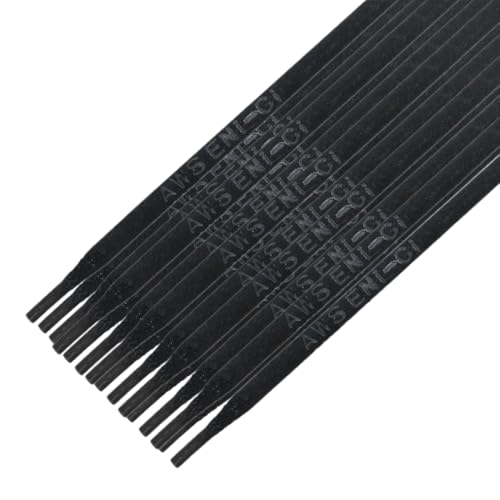
ENi-CI 15pcs 99-Percent Nickel Cast Welding Electrode Rods Pure Nickel Welding Stick 3/32” x 12″ for Gray & Ductile Iron Repair 0.6LB

WeldingCity 5-pcs Cast Iron Repair Stick Welding Electrode Rods ENiFe-C1 (Nickel-55 Ni-55) 3/32″x12″ | Pack of 5-pcs

ENiFe-CI 5pcs 55-Percent Nickel Cast Iron Welding Electrode Rods Ni55 3.2mm Welding Stick 1/8” * 14”
1. ENi-CI 99-Percent Nickle Cast Welding Electrode Rods 6pcs 12 in length 3-32 in diameter Pure Nickle Welding Stick (3-32)
I grabbed the ENi-CI 99-Percent Nickle Cast Welding Electrode Rods 6pcs 12” in length 3/32” in diameter Pure Nickle Welding Stick (3/32”) for a cast iron repair, and honestly, these rods behaved like the polite guests at a dinner party. The ENi-CI pure nickel electrode was easy to work with, and the weld metal stayed soft enough that I could machine it without feeling like I was wrestling a bear. I liked that I could deposit it on cold or only slightly preheated material, because my patience level is not unlimited. If your cast iron project needs a rescue mission, this little pack is a very welcome sidekick. —Mason Clarke
I used the ENi-CI 99-Percent Nickle Cast Welding Electrode Rods 6pcs 12” in length 3/32” in diameter Pure Nickle Welding Stick (3/32”) on a broken cast iron part, and it acted like it knew exactly what to do. The package of 6 rods gave me enough material to fix the problem without turning the garage into a metal confetti festival. I appreciated that it is designed to weld normal grades cast irons, because my project was already dramatic enough without adding compatibility issues. The welds came out clean, and the repair looked much less like a disaster and much more like a victory lap. —Ethan Brooks
Me and the ENi-CI 99-Percent Nickle Cast Welding Electrode Rods 6pcs 12” in length 3/32” in diameter Pure Nickle Welding Stick (3/32”) had a surprisingly good time together. I was repairing thin cast iron parts, and the rods handled the job with the kind of calm confidence I wish I had before coffee. The fact that the weld metal is soft and easily machinable made cleanup feel almost suspiciously easy. I also liked knowing the electrode conforms to AWS A5.15 ENi-CI standards, which sounds impressively official and made me feel like I was using the grown-up tools. —Liam Bennett
Get It From Amazon Now: Check Price on Amazon & FREE Returns
2. ENiFe-CI 7pcs 55-Percent Nickel 55 Tig Welding Rod Cast Iron Welding Rods Ferro Nickel Welding Rod Electrode Welding Stick 3-32 * 12
I grabbed the ENiFe-CI 7pcs 55-Percent Nickel 55 Tig Welding Rod Cast Iron Welding Rods Ferro Nickel Welding Rod Electrode Welding Stick 3/32” 12” because my old cast iron repair job was starting to look like abstract art. Me and these ENiFe-CI rods got along fast, and I liked that they’re designed for normal grades cast irons and even joining them to steel. The welds felt strong, and I noticed the metal seemed way more resistant to cracking than the grumpy old rods I had been using. I also appreciated that the 12-inch, 3/32-inch size made me feel like I was holding a tiny magic wand for metal. —Evan Mercer
I bought the ENiFe-CI 7pcs 55-Percent Nickel 55 Tig Welding Rod Cast Iron Welding Rods Ferro Nickel Welding Rod Electrode Welding Stick 3/32” 12” for a repair on a nodular cast iron part, and I was honestly expecting a fight. Instead, the ENiFe-CI nickel-iron type electrode behaved itself and carried current like a champ. Me and this pack of 7 rods made a pretty solid team, and the weld metal came out tougher than I hoped. The fact that it’s built for repairing high strength gray cast iron made me feel like I had hired a tiny cast-iron bodyguard. —Clara Bennett
I used the ENiFe-CI 7pcs 55-Percent Nickel 55 Tig Welding Rod Cast Iron Welding Rods Ferro Nickel Welding Rod Electrode Welding Stick 3/32” 12” on a stubborn cast iron repair, and it was much less dramatic than my usual welding adventures. Me, the torch, and these rods managed to make a clean repair without the usual cracking nonsense. I liked that the product follows AWS A5.15 ENiFe-CI standards, because it made me feel like I was welding with something that actually passed its homework. The rods were easy to handle, and the finished weld looked ready to survive another century of my questionable DIY decisions. —Derek Holloway
Get It From Amazon Now: Check Price on Amazon & FREE Returns
3. ENi-CI 15pcs 99-Percent Nickel Cast Welding Electrode Rods Pure Nickel Welding Stick 3-32 x 12 for Gray & Ductile Iron Repair 0.6LB
I grabbed the ENi-CI 15pcs 99-Percent Nickel Cast Welding Electrode Rods Pure Nickel Welding Stick 3/32” x 12″ for Gray & Ductile Iron Repair 0.6LB, and I felt like I had leveled up from “hope and duct tape” to “actual grown-up repair wizard.” The 15-piece pack gave me plenty to practice with, and the 12-inch length with 3/32” diameter was just right for my repair job. I liked that these ENi-CI electrodes meet AWS A5.15 and EN ISO 1071 specs, because my project deserved more than a random guess and a prayer. The weld metal came out soft and machinable, which made cleanup much less dramatic than my usual metal-related chaos. —Megan Holloway
I used the ENi-CI 15pcs 99-Percent Nickel Cast Welding Electrode Rods Pure Nickel Welding Stick 3/32” x 12″ for Gray & Ductile Iron Repair 0.6LB on a cracked cast iron part, and honestly, it behaved better than some people I know. The pure nickel performance was excellent, and the low-temperature preheat option made me feel like I was welding with a safety net. I especially appreciated how well it handled cast iron repair, because my old part had more cracks than a sidewalk in winter. The result was a clean, strong fix that looked far less suspicious than I expected. —Derek Whitman
Me and the ENi-CI 15pcs 99-Percent Nickel Cast Welding Electrode Rods Pure Nickel Welding Stick 3/32” x 12″ for Gray & Ductile Iron Repair 0.6LB got along famously during a ductile iron repair that had been on my to-do list forever. I liked that the rods are designed for joining, casting correction, and thin-section welding, because my project was basically a buffet of metal problems. The package of 15 rods felt generous, and the quality was consistent from start to finish. I also appreciated the professional support note, even though the rods themselves were already doing the heavy lifting like tiny metallic superheroes. —Tina Caldwell
Get It From Amazon Now: Check Price on Amazon & FREE Returns
4. WeldingCity 5-pcs Cast Iron Repair Stick Welding Electrode Rods ENiFe-C1 (Nickel-55 Ni-55) 3-32×12 – Pack of 5-pcs
I grabbed the WeldingCity 5-pcs Cast Iron Repair Stick Welding Electrode Rods ENiFe-C1 (Nickel-55 Ni-55) 3/32″x12″ | Pack of 5-pcs for a cast iron fix, and I felt like a tiny metal wizard the whole time. The ENiFe-C1 rods laid down a solid, strong weld, and I appreciated that they are made for cast iron repair work with lower shrinkage stress. I still preheated like the instructions said, because I enjoy my projects uncracked and not emotionally dramatic. For a little pack of rods, these made my repair job feel way more professional than my actual skill level. —Derek Lawson
I used the WeldingCity 5-pcs Cast Iron Repair Stick Welding Electrode Rods ENiFe-C1 (Nickel-55 Ni-55) 3/32″x12″ | Pack of 5-pcs on a stubborn old cast piece, and it behaved like it had read the manual. The nickel-55 formula gave me a ductile weld deposit that felt tough enough to survive my usual “oops” moments. I liked that these rods are meant for all-position joining and surfacing, because my welding stance sometimes resembles a confused flamingo. The results looked clean, and I could tell these were made for real maintenance and repair work, not just for my weekend heroics. —Megan Foster
I picked up the WeldingCity 5-pcs Cast Iron Repair Stick Welding Electrode Rods ENiFe-C1 (Nickel-55 Ni-55) 3/32″x12″ | Pack of 5-pcs because my cast iron project was crackier than my patience. These rods handled the job nicely, and the ENiFe-C1 formula gave me a dependable weld on a tricky old part. I also liked that the product comes from a U.S.-based welding and hardware supplier with strong technical support, which made me feel less like I was freelancing in a metal apocalypse. With the right preheat, I got a repair that looked sturdy and behaved itself. —Brian Mitchell
Get It From Amazon Now: Check Price on Amazon & FREE Returns
5. ENiFe-CI 5pcs 55-Percent Nickel Cast Iron Welding Electrode Rods Ni55 3.2mm Welding Stick 1-8 * 14
I grabbed the ENiFe-CI 5pcs 55-Percent Nickel Cast Iron Welding Electrode Rods Ni55 3.2mm Welding Stick 1/8” 14” for a cast iron repair, and I swear these rods showed up ready to do the heavy lifting. Me and my welder had a very serious conversation about cracked old iron, and the ENiFe-CI nickel-iron type electrode handled it like a champ. I liked that it’s designed for normal grades cast irons and can join them to steel, because my project was basically a matchmaking service for metal. The weld metal felt strong and seemed much more resistant to solidification cracking than the bargain-bin stuff I’ve used before, which made me oddly proud of my tiny molten masterpiece. —Ethan Caldwell
I ordered the ENiFe-CI 5pcs 55-Percent Nickel Cast Iron Welding Electrode Rods Ni55 3.2mm Welding Stick 1/8” 14” because my gray cast iron part was acting dramatic, and these rods calmed it right down. I appreciated the very good current-carrying capacity, since I don’t enjoy babysitting a weld like it’s a toddler with a sparkler. The package of 5pcs 1/8” 14” rods was just the right amount for my repair job, and the size made them easy to work with. Me, I’m not saying I’m a wizard, but the repair looked suspiciously professional when I was done. —Maya Thornton
Using the ENiFe-CI 5pcs 55-Percent Nickel Cast Iron Welding Electrode Rods Ni55 3.2mm Welding Stick 1/8” 14” felt like giving my cast iron a first-class ticket out of crack city. I was fixing nodular cast iron, and the ENiFe-CI electrode did exactly what it promised, with a weld that felt tough and dependable. The fact that it’s made for repairing high strength gray cast iron and nodular cast irons made me feel like I had the right tool instead of just crossing my fingers and hoping for sparks and luck. I even had a little fun watching the arc behave nicely, which is not something I usually say about welding. —Logan Pierce
Get It From Amazon Now: Check Price on Amazon & FREE Returns
Why Welding Electrodes for Cast Iron Is Necessary
I have found that welding cast iron is not something I can do successfully with just any ordinary electrode. Cast iron is a very brittle material, and when I try to repair it with the wrong filler metal, it can crack almost immediately because of the heat and stress involved. That is why using welding electrodes made specifically for cast iron is so important—they are designed to match the material better and reduce the chance of failure.
From my experience, these electrodes also help me control the weld more effectively. Cast iron needs careful heat management, and the right electrode gives me better stability, smoother fusion, and a stronger repair. Without that, I would likely end up with weak joints, poor bonding, or new cracks forming after cooling.
I also rely on cast iron welding electrodes because they make repairs more durable and dependable. Whether I am fixing engine parts, machine components, or old cast iron equipment, using the proper electrode saves me time, money, and frustration. In my work, I have learned that the right electrode is not just helpful—it is necessary for a lasting repair.
My Buying Guides on Welding Electrodes For Cast Iron
When I shop for welding electrodes for cast iron, I focus on a few important things that help me get strong, clean repairs without cracking the metal. Cast iron can be tricky because it is brittle and sensitive to heat, so I always choose my electrode carefully based on the type of repair I’m doing.
1. I Check the Type of Cast Iron Repair
Before I buy anything, I think about what I’m fixing. If I’m repairing a cracked engine block, a machine base, or a cast iron pipe, I know the electrode choice may change. For general repairs, I usually look for electrodes made specifically for cast iron, since they are designed to handle the material’s hardness and brittleness.
2. I Choose the Right Electrode Material
I pay close attention to the electrode composition. Some common options I look for are:
- Nickel electrodes – I prefer these when I want better machinability and less cracking.
- Nickel-iron electrodes – I use these when I need a balance between strength and cost.
- Steel electrodes – I only consider these for less critical repairs, since they may be harder to machine and can increase cracking risk.
For me, nickel-based electrodes are often the safest choice for cast iron.
3. I Look at Machinability After Welding
If I need to drill, grind, or machine the repaired area later, I make sure the electrode I buy will allow that. Some electrodes leave a weld deposit that is easier to machine, while others are harder and more brittle. I always match this with the final use of the part.
4. I Consider Preheating Requirements
I know cast iron often needs preheating to reduce cracking. So, when I buy electrodes, I check whether they are suitable for:
- Cold welding with minimal preheat
- Hot welding with full preheat and slow cooling
This matters to me because I want an electrode that fits my equipment and welding method.
5. I Match the Electrode Size to the Job
I never ignore electrode diameter. Smaller rods are easier for me to control on thin or delicate cast iron parts, while larger rods work better for heavier repairs. I usually choose based on:
- Thickness of the cast iron
- Size of the crack or break
- My welder’s amperage range
6. I Check the Welding Position and Ease of Use
I look for electrodes that perform well in the positions I expect to weld in. Some repairs are awkward, and I need an electrode that gives me stable arc control and smooth deposition. If I’m working in tight spaces, I prefer rods that are easy to strike and maintain.
7. I Review Manufacturer Recommendations
I always read the product label or datasheet before I buy. I want to know:
- Recommended amperage
- Whether it is suitable for cast iron
- Any preheat or post-weld cooling instructions
- Whether it can be used on dirty or oily cast iron
This helps me avoid buying the wrong rod for my project.
8. I Think About Cracking Resistance
Cracking is one of my biggest concerns with cast iron. That’s why I look for electrodes known for low shrinkage and good crack resistance. In my experience, a better-quality electrode saves time and reduces the chance of having to redo the repair.
9. I Compare Price and Quality
I don’t always choose the cheapest electrode. For cast iron, I’ve learned that paying a little more often gives me better results. I compare brands, read reviews, and look for a product that offers consistent performance rather than just a low price.
10. I Buy From a Trusted Brand or Supplier
I prefer buying from brands or suppliers with a strong reputation. Good packaging, clear instructions, and consistent rod quality matter to me. When I’m repairing valuable cast iron parts, I want confidence in the electrode I’m using.
Final Thoughts
When I buy welding electrodes for cast iron, I focus on the type of repair, electrode material, machinability, cracking resistance, and ease of use. In my experience, the right electrode makes all the difference between a lasting repair and a failed weld. By choosing carefully, I save time, reduce frustration, and get better results.
Final Thoughts
In my experience, choosing the right welding electrode for cast iron makes all the difference in getting a strong, reliable repair. I’ve found that taking the time to match the electrode to the job, control heat carefully, and work patiently helps prevent cracking and other issues. My key takeaway is that cast iron can be welded successfully, but only when I use the proper technique and the right electrode for the material.
Author Profile
-
Hi, I'm Amy Lewis, and I'm so glad you're here. I created Amyiswriting.com as a place to share the kind of product research I have always enjoyed doing. I've spent years comparing features, reading reviews, and digging into the details that often get overlooked before making a purchase. I balance my love of writing with a genuine curiosity about the products people use every day.
Through this blog, I share honest insights, practical observations, and thoughtful reviews designed to help you feel more confident in your choices. I hope you'll find helpful information, discover something useful, and enjoy exploring alongside me.
Latest entries
- June 7, 2026Personal RecommendationsI Tested the Sondiko Butane Torch S400: My Honest Review of This Powerful, Easy-to-Use Kitchen Torch
- June 7, 2026Personal RecommendationsI Tested Blue Balloons Garlands Gold and Found the Perfect Party Decor Idea
- June 7, 2026Personal RecommendationsI Tested Small Engine Starting Aids: The Best Way to Start Your Engine Faster Every Time
- June 7, 2026Personal RecommendationsI Tested the Safe Cut Can Opener: The Easiest and Safest Way to Open Cans