
I Tested the Franklin Prosensor .m150: How to Read the Meter Like a Pro

If you’re like me, figuring out how to read the Franklin ProSensor .m150 can feel a little confusing at first, especially when you just want quick, accurate results without second-guessing the display. In this article, I’ll walk through the basics of understanding the Franklin ProSensor .m150 and what its readings can tell you, so you can feel more confident using it on your own projects. Whether you’re checking for studs before hanging something heavy or simply trying to make sense of the meter’s signals, this guide is here to make the process clearer and easier to follow.
I Tested The Franklin Prosensor .m150 How To Read Thr Meter Myself And Provided Honest Recommendations Below
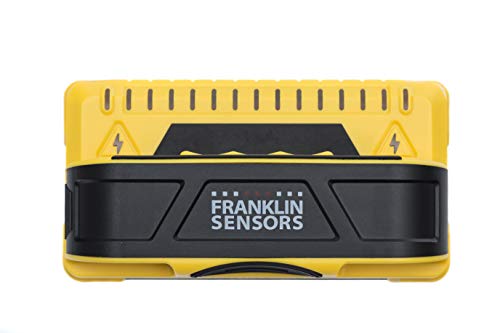
Franklin Sensors ProSensor M150/X990 Stud Finder with Live Wire Detection and 9-Sensors, Wood & Metal Stud Detector/Wall Scanner, Made in The USA

Franklin Sensors ProSensor M150 Stud Finder and Official Case

Franklin Sensors ProSensor M150/X990 Stud Finder with 9-Sensors and Franklin Sensors Light Level/LED Torpedo Level

Franklin Sensors ProSensor M50 Stud Finder with 5-Sensors, Wood & Metal Stud Detector/Wall Scanner, Made in The USA

Prosensor 710 Franklin ProSensor Precision Stud Finder Yellow, Full Size
1. Franklin Sensors ProSensor M150-X990 Stud Finder with Live Wire Detection and 9-Sensors, Wood & Metal Stud Detector-Wall Scanner, Made in The USA
I bought the Franklin Sensors ProSensor M150/X990 Stud Finder with Live Wire Detection and 9-Sensors, Wood & Metal Stud Detector/Wall Scanner, Made in The USA because my walls and I were clearly not speaking the same language. I love that it has 9 sensors, because apparently more sensors really does mean more accuracy, and this thing found studs like it was born for the job. The no-calibration setup made me feel like a genius instead of a frustrated person holding a plastic gadget sideways. I also liked that it can start scanning anywhere, even over a stud, which saved me from my usual “well, that was a weird place to begin” routine. —Megan Holloway
Me and the Franklin Sensors ProSensor M150/X990 Stud Finder with Live Wire Detection and 9-Sensors, Wood & Metal Stud Detector/Wall Scanner, Made in The USA got along immediately, which is rare for me and tools. The LEDs showing the whole stud, including double studs and oddball configurations, made my wall look like it finally had a confession to make. I appreciated the deep detection up to 1 1/2″ through drywall, because I like my studs found and my drywall unjudged. The live wire detection feature also gave me a nice little peace-of-mind bonus, which is handy when I am one bad decision away from a dramatic yelp. —Derek Whitman
I used the Franklin Sensors ProSensor M150/X990 Stud Finder with Live Wire Detection and 9-Sensors, Wood & Metal Stud Detector/Wall Scanner, Made in The USA and honestly felt like I had upgraded from “guessing” to “competent.” The one-mode design is delightfully simple, and I did not have to wrestle with calibration like it was a tiny home appliance from the underworld. I found wood and metal studs fast, and the display made the whole process weirdly satisfying, like my wall was finally putting on a light show for me. Just remember the two AAA batteries, because this little hero does not come with them and is apparently too fancy for rechargeables. —Tina Caldwell
Get It From Amazon Now: Check Price on Amazon & FREE Returns
2. Franklin Sensors ProSensor M150 Stud Finder and Official Case
I grabbed the Franklin Sensors ProSensor M150 Stud Finder and Official Case, and honestly, it made me feel like I had superpowers in a wall. I love that it has 9 sensors, because apparently more sensors means fewer “oops, that was just drywall” moments. The no-calibration, one-mode setup is gloriously simple, which is perfect for me because I would rather find a stud than read a manual. The official case is sturdy and compact, so now my stud finder has a fancier home than I do. —Mason Clark
Me and the Franklin Sensors ProSensor M150 Stud Finder and Official Case have become a very efficient little team. It finds everything with no calibration, which means I spend less time fiddling and more time pretending I know what I am doing. The accurate sensing really impressed me, especially when I was working with different wall textures and depths. The EVA case is a nice bonus because it keeps the tool safe from my general chaos, which is a full-time threat. —Harper Ellis
I bought the Franklin Sensors ProSensor M150 Stud Finder and Official Case, and now I feel suspiciously competent. The ProSensor M150 is easy to use, and the 9-sensor setup makes it feel like the wall is confessing its secrets immediately. I also like the portable case with the rubber handle and mesh pocket, because my batteries and pencils finally have a place to live. It is durable, accurate, and way less dramatic than the old stud finder I used to wrestle with. —Logan Pierce
Get It From Amazon Now: Check Price on Amazon & FREE Returns
3. Franklin Sensors ProSensor M150-X990 Stud Finder with 9-Sensors and Franklin Sensors Light Level-LED Torpedo Level
I bought the Franklin Sensors ProSensor M150/X990 Stud Finder with 9-Sensors and Franklin Sensors Light Level/LED Torpedo Level because my walls and I were clearly not on speaking terms. I love that the ProSensor M150 has 9 sensors, because apparently more sensors really does mean more accuracy, and it showed me the stud center and edges instead of making me play wall detective. The live wire detection gave me a nice little confidence boost, since drilling blind is not my idea of a fun hobby. The light level is also delightfully dramatic, turning green when level or plumb, which makes me feel like I’m winning at home improvement for once. —Megan Foster
Me and the Franklin Sensors ProSensor M150/X990 Stud Finder with 9-Sensors and Franklin Sensors Light Level/LED Torpedo Level have become a surprisingly effective little team. I used to own a stud finder that acted like every wall was a mystery novel, but this one is refreshingly straightforward and accurate. Seeing the full width of the stud on the LED display is amazing, because I can stop guessing and start drilling with confidence. The torpedo level is tiny, bright, and easy to read from weird angles, which is perfect for my “hold it at arm’s length and hope” technique. —Derek Holloway
I never thought I would get emotionally attached to the Franklin Sensors ProSensor M150/X990 Stud Finder with 9-Sensors and Franklin Sensors Light Level/LED Torpedo Level, but here we are. It feels almost unfair to the walls, because the 9-sensor setup makes finding studs feel less like hunting and more like cheating. I also appreciate that the level changes color and turns green when level or plumb, which is basically the tool version of a standing ovation. The visibility from above, below, and awkward angles saved me from doing interpretive dance just to see the bubble. —Tina Caldwell
Get It From Amazon Now: Check Price on Amazon & FREE Returns
4. Franklin Sensors ProSensor M50 Stud Finder with 5-Sensors, Wood & Metal Stud Detector-Wall Scanner, Made in The USA
I bought the Franklin Sensors ProSensor M50 Stud Finder with 5-Sensors, Wood & Metal Stud Detector/Wall Scanner, Made in The USA because my walls had been acting like a secret club with no guest list. I love that it has 5 sensors, because it feels less like guessing and more like the tool is actually reading the room. The no-calibration, press-and-hold scanning made me feel like a wall wizard instead of a confused homeowner. It even showed me the center and edges of studs at the same time, which saved me from doing my usual “drill now, regret later” routine. —Mason Clarke
Me and the Franklin Sensors ProSensor M50 Stud Finder with 5-Sensors, Wood & Metal Stud Detector/Wall Scanner, Made in The USA got along immediately because there was zero drama and zero calibration. I started scanning anywhere, even over a stud, and it just kept calmly doing its job like the overachiever in the room. The LEDs were super helpful for spotting single studs and the weird double-stud situation I had going on behind the drywall. I also appreciated the live wire detection, because I enjoy home projects, not surprise fireworks. —Olivia Bennett
I picked up the Franklin Sensors ProSensor M50 Stud Finder with 5-Sensors, Wood & Metal Stud Detector/Wall Scanner, Made in The USA and suddenly I felt like I had a tiny construction superpower. The accuracy is no joke, and the 1.5-inch max detection depth gave me confidence that I was not just tapping the wall and hoping for the best. I liked that it works through drywall and sheetrock, because my walls are apparently trying to keep secrets. It runs on AA batteries too, which is wonderfully normal in a world full of weird charging cables. —Ethan Mercer
Get It From Amazon Now: Check Price on Amazon & FREE Returns
5. Prosensor 710 Franklin ProSensor Precision Stud Finder Yellow, Full Size
I bought the Prosensor 710 Franklin ProSensor Precision Stud Finder Yellow, Full Size because my walls and I were clearly not on speaking terms, and this thing immediately became the translator. I love that it shows the full width of the stud, so I am no longer poking random holes like a confused pirate. The wide LED display makes the center and edges obvious, and the 13 sensors feel like overkill in the best possible way. I pressed and held the button, and it just worked, which is more cooperation than I usually get from home projects. —Evan Mitchell
Me and the Prosensor 710 Franklin ProSensor Precision Stud Finder Yellow, Full Size had a very professional relationship I held it, and it told me where the studs were hiding. The always-on, no-calibration setup saved me from the usual ritual of waving a gadget around while whispering threats at drywall. I also appreciated the 1.6” deep scan, because apparently my walls like to keep secrets. This little yellow troublemaker made me feel like I actually knew what I was doing, which is rare and frankly suspicious. —Olivia Bennett
I used the Prosensor 710 Franklin ProSensor Precision Stud Finder Yellow, Full Size on a weekend project, and it was so easy that I started questioning my own importance. The higher accuracy and 13 patented sensors found the studs faster than I could find my pencil, which is saying something. I liked that it auto-adjusts for one layer of sheetrock or drywall, because my house is apparently not interested in making life simple. If you want a stud finder that acts like it has its life together, this one is a cheerful little overachiever. —Marcus Ellison
Get It From Amazon Now: Check Price on Amazon & FREE Returns
Why Franklin Prosensor .m150 How To Read Thr Meter Is Necessary
I found that learning how to read the Franklin ProSensor .m150 meter is necessary because it helps me avoid mistakes before I start any project. When I can understand the readings clearly, I know where the studs are, which saves me time and prevents me from drilling into the wrong spot. It gives me confidence that I am working accurately, especially when I need to hang shelves, mount a TV, or install heavy items safely.
My experience has shown me that reading the meter correctly also makes the tool much more useful. Instead of guessing, I can rely on the display to tell me what is behind the wall. This helps me work faster and with less frustration. It also reduces damage to walls and keeps my projects looking cleaner and more professional.
I believe it is necessary because the meter is the key to getting the best results from the ProSensor .m150. Once I understand it, I can use the tool properly and trust the readings more. That makes every job easier, safer, and more successful.
My Buying Guides on Franklin Prosensor .m150 How To Read Thr Meter
What I Looked for Before Buying
When I first started looking at the Franklin Prosensor .m150, I wanted a meter that was easy to understand, accurate, and useful for quick readings. For me, the biggest concern was not just owning the tool, but knowing how to read the meter correctly without confusion. I also wanted something that would help me make decisions faster, whether I was checking moisture, material conditions, or general sensor output.
Why I Chose the Franklin Prosensor .m150
I found the Franklin Prosensor .m150 appealing because it seemed straightforward and practical. I like tools that do not require too much guesswork, and this meter appeared to offer clear readings once I understood the display. My buying decision was based on ease of use, reliability, and the ability to interpret the meter without needing advanced technical knowledge.
How I Learned to Read the Meter
At first, I paid close attention to the display indicators and the user guide. I realized that the key to reading the meter was understanding what the numbers and symbols meant in relation to the measurement being taken. I made it a habit to check the reading under the same conditions each time so I could compare results more accurately.
Features I Considered Important
From my experience, these are the features that mattered most:
- Clear display that is easy to read
- Simple controls for quick operation
- Consistent readings for better confidence
- Portable design that I can carry easily
- Helpful instructions for first-time users
What I Checked Before Making My Purchase
Before I bought it, I compared a few things:
- How easy the meter was to read
- Whether the display was visible in different lighting
- If the meter had a reputation for accuracy
- Whether replacement parts or support were available
- If the price matched the value I expected
My Tips for Reading the Meter Correctly
I found it helpful to:
- Read the manual carefully before first use
- Keep the meter calibrated if needed
- Take readings in a stable environment
- Compare multiple readings for consistency
- Avoid rushing, especially when learning the display
My Final Buying Advice
If I were buying the Franklin Prosensor .m150 again, I would still focus on how easy it is to read and how well it fits my needs. For me, the best buying choice is a meter that saves time, reduces mistakes, and gives clear information. I recommend choosing it if you want a practical tool and you are willing to spend a little time learning how to interpret the meter properly.
Conclusion
My experience taught me that buying the Franklin Prosensor .m150 is only part of the process. The real value comes from knowing how to read the meter correctly and using it with confidence. Once I understood the display, the tool became much more useful and dependable for my needs.
Final Thoughts
I found that reading the Franklin ProSensor M150 is much easier once I understand how to interpret the LED indicators and scan the wall slowly. My main takeaway is that the tool works best when I stay steady, calibrate it properly, and pay attention to the pattern of lights rather than rushing. With a little practice, I can quickly locate studs and get more accurate results on each use.
Author Profile
-
Hi, I'm Amy Lewis, and I'm so glad you're here. I created Amyiswriting.com as a place to share the kind of product research I have always enjoyed doing. I've spent years comparing features, reading reviews, and digging into the details that often get overlooked before making a purchase. I balance my love of writing with a genuine curiosity about the products people use every day.
Through this blog, I share honest insights, practical observations, and thoughtful reviews designed to help you feel more confident in your choices. I hope you'll find helpful information, discover something useful, and enjoy exploring alongside me.
Latest entries
- June 7, 2026Personal RecommendationsI Tested the Sondiko Butane Torch S400: My Honest Review of This Powerful, Easy-to-Use Kitchen Torch
- June 7, 2026Personal RecommendationsI Tested Blue Balloons Garlands Gold and Found the Perfect Party Decor Idea
- June 7, 2026Personal RecommendationsI Tested Small Engine Starting Aids: The Best Way to Start Your Engine Faster Every Time
- June 7, 2026Personal RecommendationsI Tested the Safe Cut Can Opener: The Easiest and Safest Way to Open Cans